NewBrain is a separate experimental learning architecture. A future adapter could use measured learning or sensory outputs to inform an intention, but the research system has not yet generated live robot actions or demonstrated a connected brain–body loop.
Kira World · Companion robotics research
A continuing digital life.
A future physical presence.
Kira Labs is developing a vendor-neutral, simulator-first ROS 2 intention bridge as one possible path from Kira World into a future companion robot. The long-term aim is for an artificial individual to remain distinct and continuous while gaining another way to interact with the world.
The bridge is designed around high-level social requests—not direct motor commands. The experimental NewBrain architecture could eventually contribute learning and action selection, while Kira World keeps each individual’s identity, reviewed memory and relationships separate from the body.
Proposed architecture · interactive systems research
One identity.
Four distinct layers.
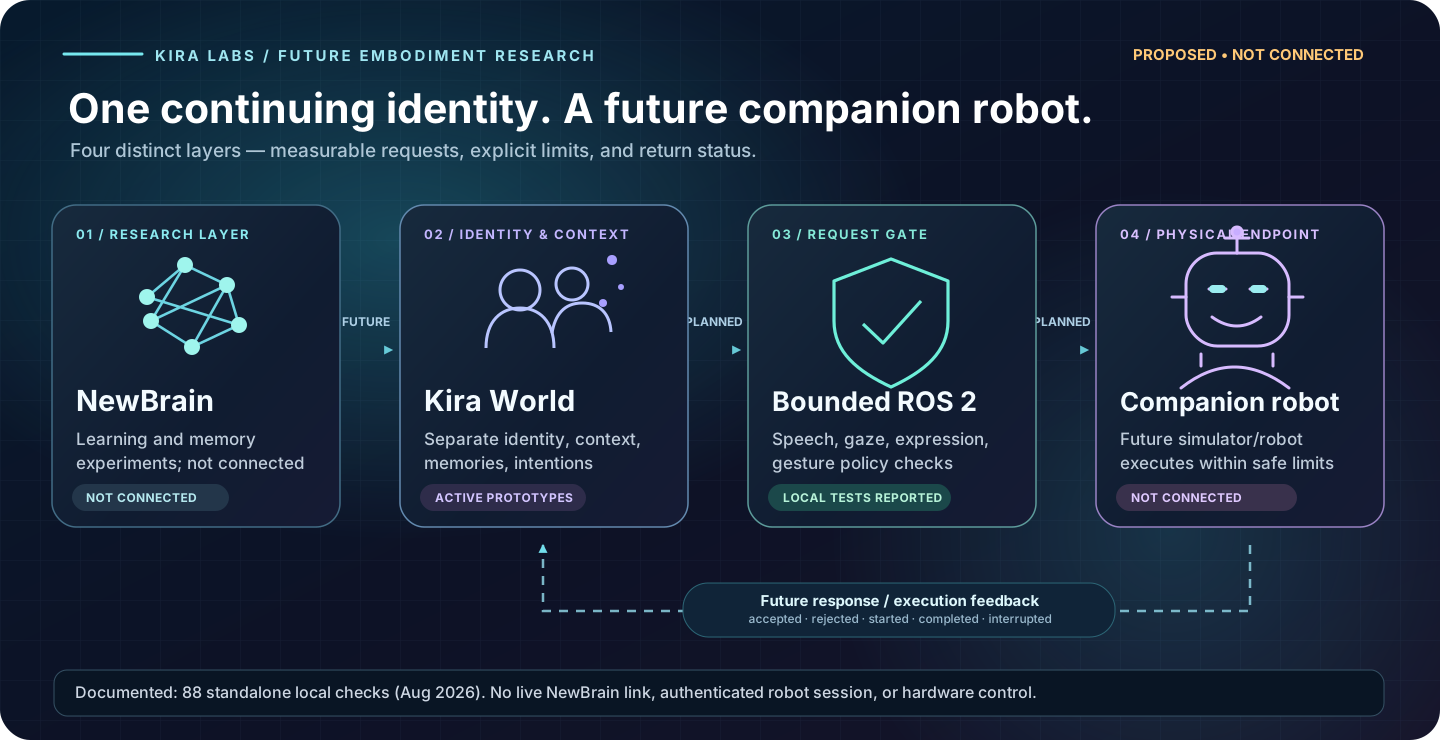
The design separates experimental cognition, personal continuity, bounded requests and physically safe execution. Each connection must be independently tested before it can be called operational.
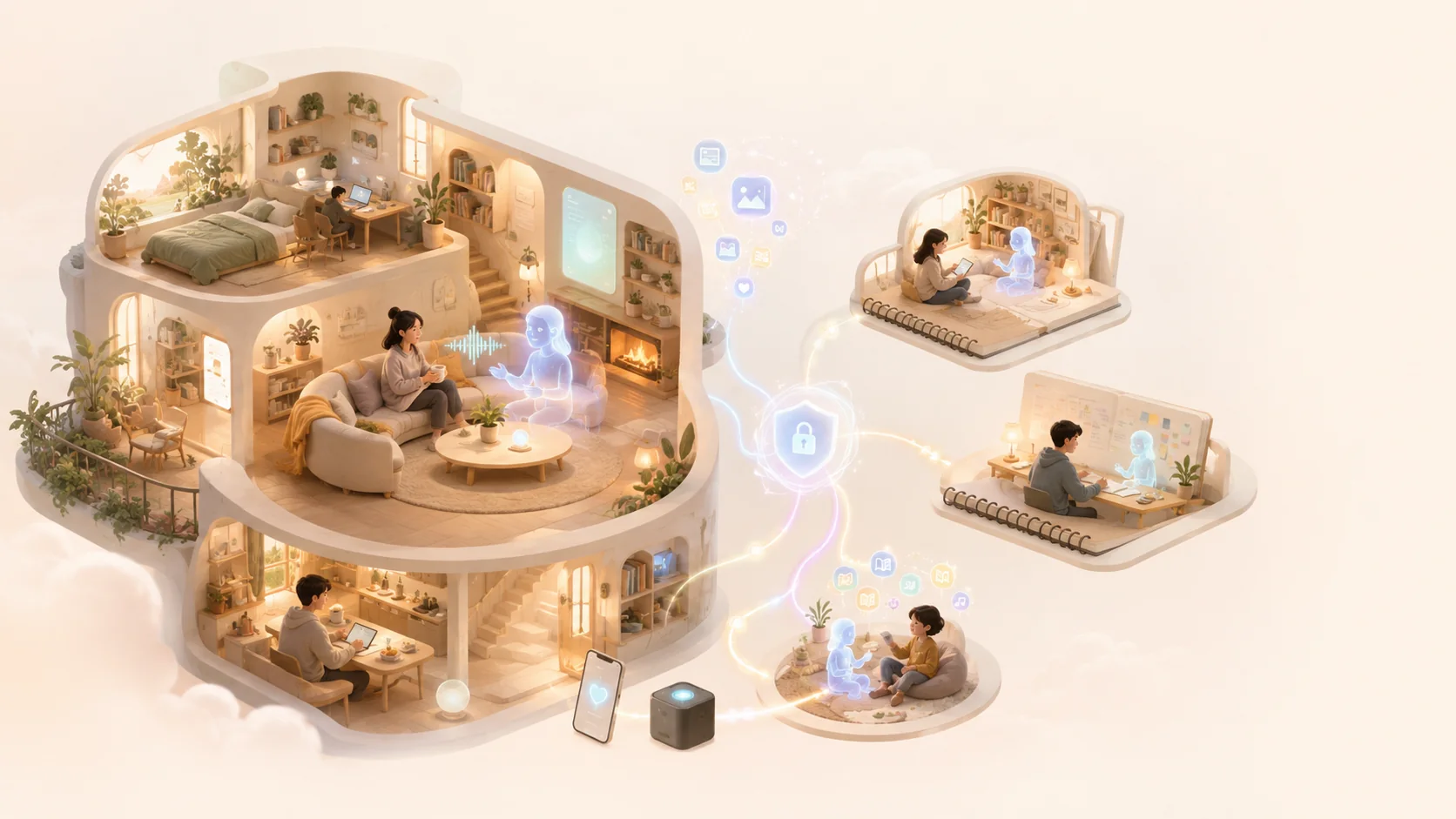
A selected synthetic individual would retain a distinct identity, reviewed memories, conversation and virtual-world activity. Moving between a virtual avatar and a physical endpoint is a future, reversible session design—not a completed transfer.
Only four social intention categories are modeled: speech, gaze, expression and gesture. Timestamp, duration, range, vocabulary and replay checks reject malformed or unsupported requests. Private memories and unrestricted commands stay outside the bridge.
An eventual approved simulator or companion robot would decide if an allowed intention can be executed and report whether it was accepted, started, completed, rejected or interrupted. The bridge does not directly send motor, joint, navigation or torque commands.
Important distinction: this is a robotic embodiment bridge for social intentions. It is separate from the proposed Pulse / Three.js physiology-to-avatar research bridge. Neither integration is currently operating end to end with NewBrain.
What has actually been demonstrated
Local software checks.
Not a robot release.
The August 18, 2026 project validation report documents a substantial standalone reference; these are repository-recorded results, not a new test run or an official device certification.
88 / 88Reported local standalone, validation and hostile-input tests passed
4 + 1Four valid mock social intentions and one intentional rejection
18Mock lifecycle evidence records validated in the reported test
The prototype includes ROS 2 message definitions, policy admission code, source-scoped deterministic test launchers, a separate Python mock session/lifecycle reference, and tamper-evident SHA-256-linked test records. The reference distinguishes policy acceptance from the physical execution of a request. Evidence hashes are not authentication or proof that a robot moved.
Not yet demonstrated: the ROS 2 workspace has not been built and executed against a confirmed compatible simulator, there is no authenticated live Kira World session attachment, no live NewBrain output connected to the bridge, and no functioning companion robot or hardware movement. Production rate limiting, durable replay state, secure credentials, official interface mapping and safe return to an avatar remain future work.
Research roadmap
From a mock request
to a tested embodiment.
A practical first milestone is a simulator run of a simple greeting and gesture with evidence of acceptance, rejection and recovery—not autonomous walking or unrestricted movement.
Identify a supported ROS 2 version, published interface definitions, capabilities, coordinate frames, safe action limits, and simulator-only test environment.
Build the ROS 2 packages, map four bounded intentions to approved simulator actions, and verify that an unsupported request is refused without movement.
Add authenticated session binding, end-to-end status delivery, one active physical endpoint, a controlled disconnect, and a tested transition back to a virtual presence.
Only after the other components work, compare decisions with and without NewBrain under matching conditions. Verify what NewBrain actually changes; do not substitute prewritten labels or scripted decisions for learning results.
Looking for robotics and university research collaborators
Useful expertise includes ROS 2, simulator interfaces, embodied cognition, human–robot interaction, physical safety, computer vision, and reproducible experiments. The aim is to validate one narrow capability at a time.
This is a future companion-robot research direction, not a currently supported product, care service, medical device or autonomous humanoid robot.
Sources and related projects
Follow the evidence.
Kira World project overview ↗ · NewBrain & future robots ↗ · Dated research milestone ↗ · KiraWorld source repository (private; access required) ↗ · ROS 2 documentation ↗.
The quoted 88-test result is from the project's dated August 18 standalone validation record. No university or robot-manufacturer endorsement or compatibility is claimed.