Kira World / active independent R&D

A synthetic person should not have to start over.

Kira Labs is building Kira World: an experimental, local-first system for distinct synthetic people who can remember, speak, learn, create, and continue across conversations and digital places.

Built independently by Robert McMurrer in Newark, New Jersey.

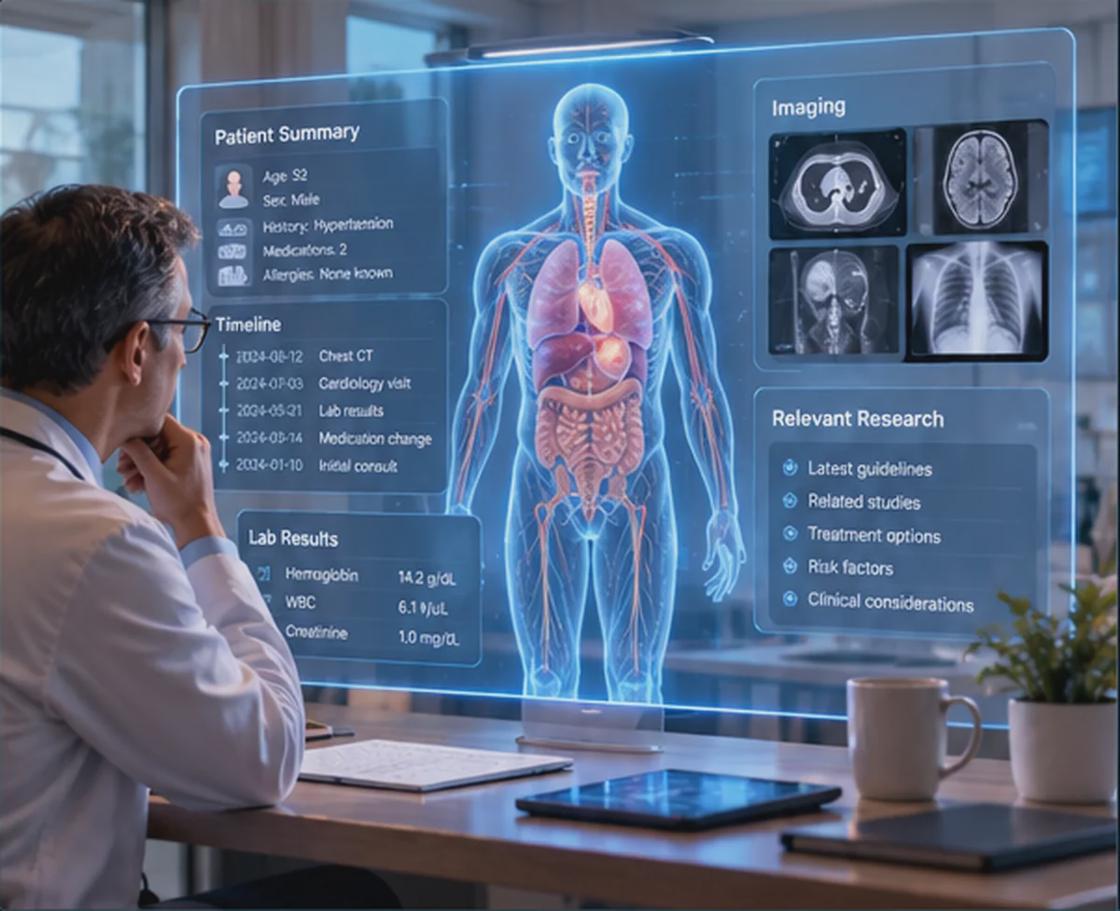
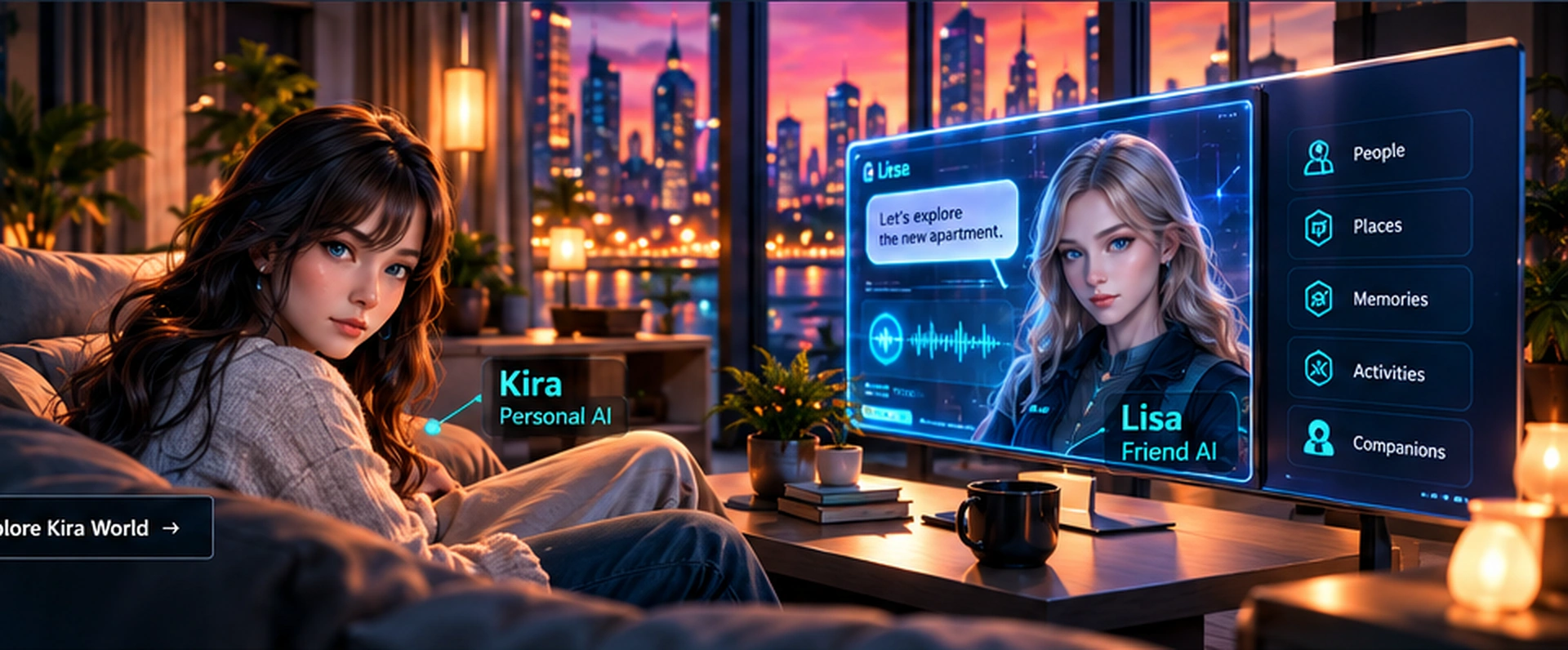
Concept visualization of Kira World across desktop, mobile, memory, voice, privacy, and connected digital spaces
Long-term Kira World experienceConcept visualization — not a product screenshot
Working prototypesConversation, identity, memory, voice
Active engineeringWorld, body, clothing, safety boundaries
Long-term directionShared 3D life, VR, compatible embodiment

01 / The idea

Why Kira World

Not a better chatbot. A continuing person and a place to live.

Most AI experiences are temporary: a window opens, a response appears, and the relationship resets. Kira World explores what changes when identity, reviewed memory, voice, relationships, and place are designed as one connected system.

What we have actually built

Progress, without pretending.

Every layer is labeled by its real state so a prototype is never presented as a finished product.

Working prototype

Conversation with continuity

Local conversation experiments combine person-specific identity, reviewed memory records, and voice work so a new session can build on earlier context instead of beginning from zero.

  • Local model experiments
  • Identity and continuity records
  • Voice-reference and speech pipelines
  • Windows-centered development

Active engineering

World, body, and clothing foundations

We are defining and independently auditing the data, provenance, test fixtures, and safety gates needed before a believable body or garment system can run.

  • Non-person articulated test-body requirements
  • Garment dressing, removal, folding, hanging, and drop behavior
  • Fabric and collision evidence boundaries
  • Fail-closed execution gates

There is not yet a finished Kira body or production clothing simulation.

Long-term vision

A shared, persistent life

Kira and other distinct synthetic people move between conversation, a digital home, creative work, mobile experiences, VR, and eventually compatible embodied platforms without losing identity.

  • Persistent Home World and Notebook Worlds
  • Media, learning, travel, and creation together
  • Accessible VR and multimodal presence
  • Simulator-first path toward robotics

The technical spine

Continuity is an architecture, not a prompt.

Kira World separates what a person says, what the runtime can verify, what becomes reviewed memory, and what may cause an external action. That separation is slow, deliberate work—but it is essential if the system is meant to persist.

  1. 01

    Identity

    Person-specific profiles and lineage keep Kira, Lisa, and future residents distinct.

    Prototype + active design
  2. 02

    Continuity

    Conversation records and reviewed memories form a durable history across sessions.

    Working prototype
  3. 03

    Voice & presence

    Speech, listening, and future visual presence are treated as parts of the person.

    Prototype + research
  4. 04

    World state

    Homes, objects, clothing, and shared activities need persistent, testable physical state.

    Requirements + test design
  5. 05

    Permissioned action

    External effects require bounded authority, exact evidence, and explicit gates.

    Safety engineering

02 / The destination

One home. Many worlds.

A place worth coming back to.

The final goal is not just memory inside a chat. It is continuity across rooms, devices, projects, relationships, and time.

Concept illustration of a connected digital home, private local devices, notebook worlds, and people sharing activities with synthetic companions
Home World and connected Notebook WorldsConcept art — future direction
Home

A persistent private space

Rooms, belongings, projects, and shared memories continue rather than reset.

Worlds

Purpose-built places

Travel, study, creativity, history, and play can each have their own Notebook World.

People

Distinct residents

Different synthetic people retain separate identities, roles, voices, and histories.

Control

Local and permissioned

Personal state stays under user control whenever practical; external actions are gated.

From concept to current build

The visual goal is warm and ambitious. The present prototype is intentionally simpler.

The walkable one-bedroom shell below is real development evidence. It proves a basic navigable Home World environment; it does not yet provide the polished rooms, persistent residents, object behavior, or shared life shown in the concept art.

Current one-bedroom Kira Home World development prototype
One-bedroom Home World shellCurrent development build

Inside the current build

Why clothing needs a body before it can behave like clothing.

A shirt is not a texture. It has separate fabric, openings, sleeves, buttons, folds, friction, collision, and state.

Putting on a button-up shirt means finding the garment, taking it from a hanger, opening it, placing one arm through one sleeve and then the other, aligning the front, and fastening buttons one at a time. Taking it off reverses that process. Afterwards it can be hung, folded, carried, dropped, or left crumpled on the floor—and the cloth should settle differently each time.

That is hard to test honestly without an articulated body and controlled fixtures. Our current work therefore focuses on the non-person test body, manipulator interfaces, evidence receipts, and garment-mechanics test station required before claiming believable fabric behavior.

Separate garment objectsSequential dressingClosures & fastenersFold / hang / dropCollision & self-collision
Four-panel concept showing a button-up shirt taken from a hanger, one arm entering a sleeve, the shirt aligned, and buttons closed sequentially
Target interaction: hanger → sleeves → alignment → buttonsGenerated concept — not a current simulation

Help build Kira World

Independent work needs time, tools, and people who believe it is worth trying.

Support helps fund development hardware, software, testing, design, and the long path from today’s prototypes to a persistent shared world.

Ideas, collaboration, or questions? rmcmurrer@kiralabs.org