Home / Kira World / Avatar Builder

Kira Labs / Avatar research / Active development

Avatar Builder.Build the individual body.

Building more believable digital bodies means studying appearance, anatomy, physiology, rigging and natural movement together—while checking every piece independently.

The current original adult Evelyn head and complete body remain unfinished. Some components and small tests work; the integrated human form has not been accepted.

Concept art is illustrative; approved, measured and rejected outcomes are labeled separately.

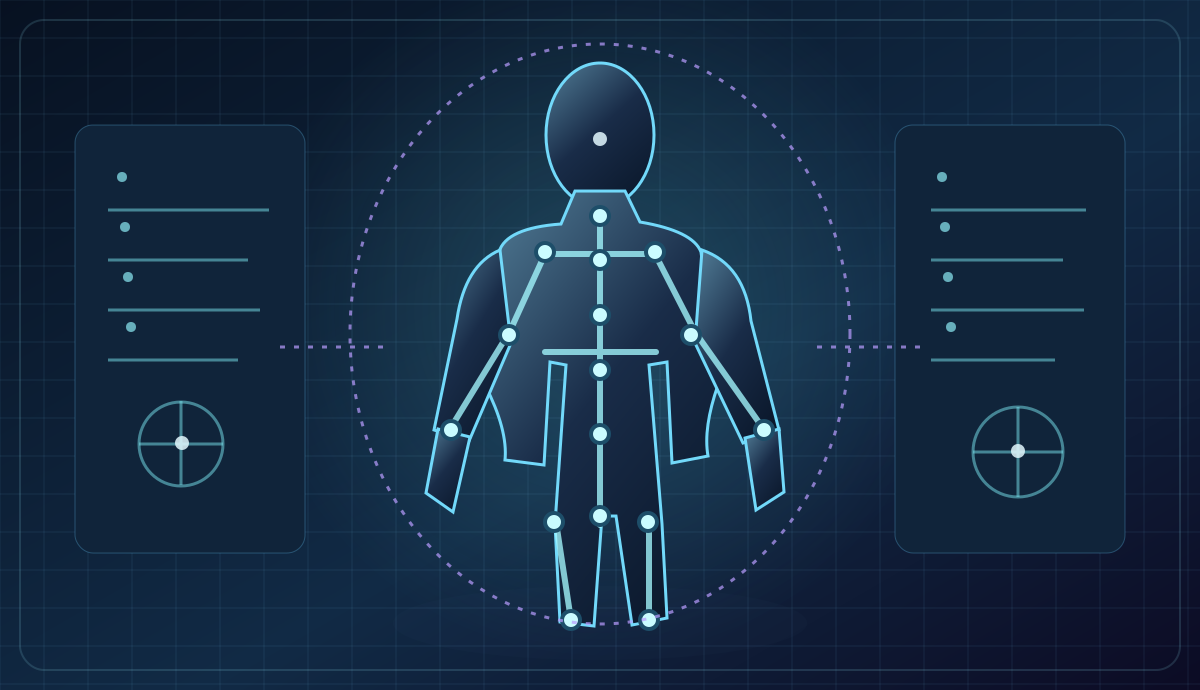
Approved Kira Labs illustrative character concept in a digital anatomy lab; not the accepted result of an Avatar Builder head or body test
Character concept illustration · Not an approved body build
01Identity & formAppearance research
02Rigging & motionBounded software tests

● Structure, beyond the surface

Anatomy and physiology matter.

The long-term aim is a body with consistent exterior form, a meaningful internal anatomical map, appropriate joints and mechanical responses, and physiological simulations where useful.

Current boundary: the full original body is not yet built or approved, and internal organ systems are not validated as functioning physiology.

Read the anatomy and movement requirements →
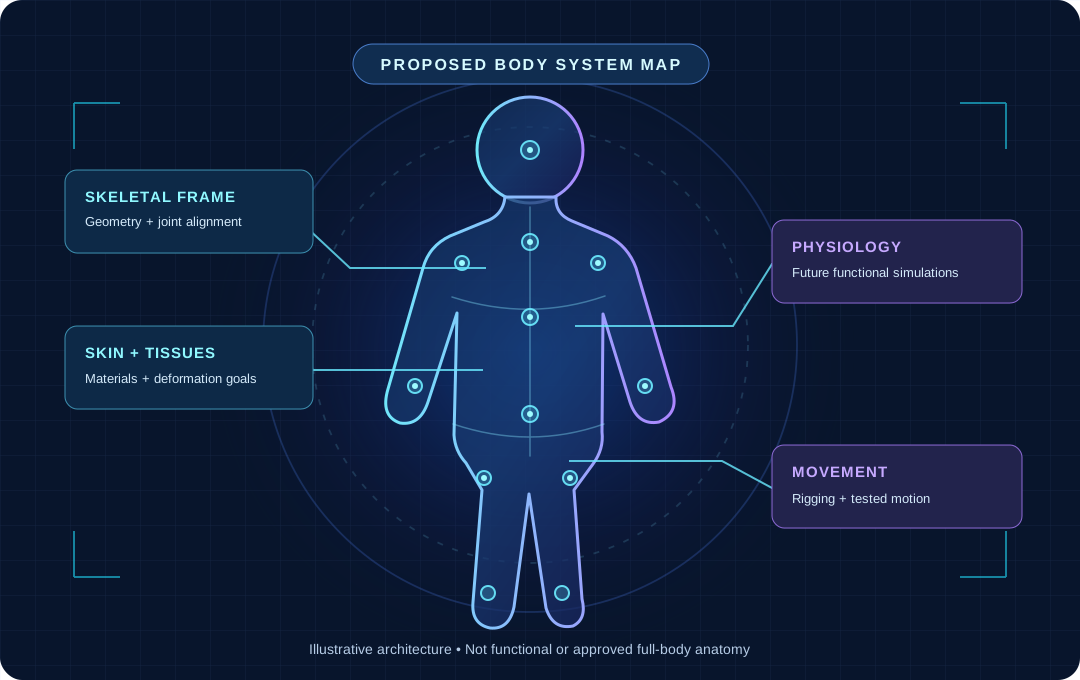
Abstract body-system diagram with skeletal frame, skin and tissue, future physiology and movement labels. It does not depict a finished anatomy model.

Concept-only system map · No completed body, functioning organs or clinical simulation implied.

1ReferencesSource and identity controls
2GeometryFace and body form
3RiggingJoints and skin weights
4MotionMovements and contacts
5ReviewTest, reject or iterate

Proposed development workflow, not a demonstrated end-to-end automated person-creation pipeline.

● Verified and bounded

Progress, without overstating it.

Measured engineering successes and unfinished human-form challenges are shown side by side.

The approved blue-eye component is preserved. A separate original-head fitting run progressed through photo/form fit, then failed eye clearance. No finished, accepted original Evelyn head or body is claimed.

Read the latest note →
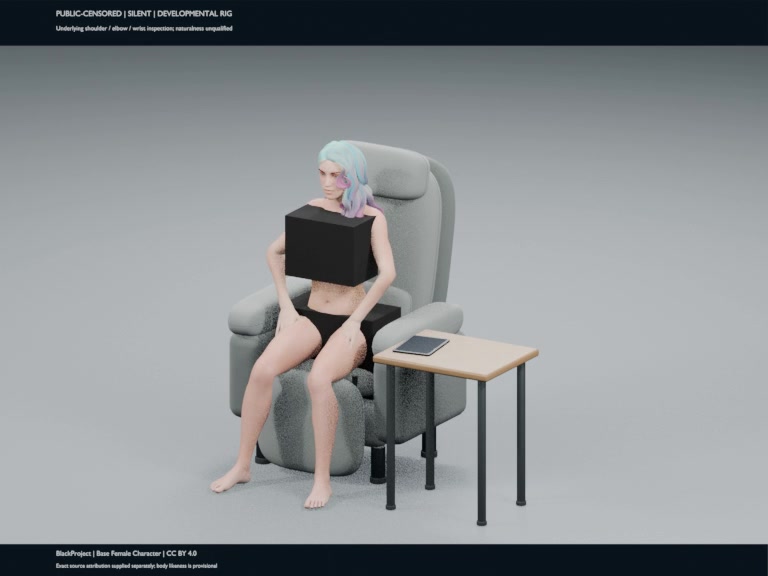
Poster for an existing privacy-censored five-second sitting animation using a licensed developmental rig ACTUAL LIMITED TEST · PUBLIC-CENSORED

● Motion experiment

Watch a real sitting test.

A short 120-frame animation demonstrates scripted motion in a licensed developmental body rig. It is not live AI movement and does not establish an accepted Evelyn body.

5 seconds · 24 fps · Privacy-covered public render · Original licensed test rig

See the video and attribution →

● Development journal

The work behind the progress.

Explore the measured studies below. They include failures, original geometry attempts, bounded source tests and future steps—not a claim that the entire avatar is ready.

November 9, 2026 · Original-procedural body v2 · Private review only

More original body variants. Not yet a believable finished person.

A new separately tracked procedural body-production lane can prepare and export adult male and female candidates using original authored geometry. Saved build records and structural checks are useful engineering evidence, not approvals of anatomy, facial likeness, hands, feet, natural motion, clothing behaviour or complete desktop use. No candidate was accepted for everyday Kira World residency or activated by this work.

Person Creator also gained clearer draft age/body-policy checks and consent requirements for future permanent residency. Creating a profile or passing a limited test does not create or activate an individual. Read the November 9 public research update →

November 7, 2026 · New original-body V90–V95 trials · Reference-proportion research, no owner acceptance

Body references begin influencing geometry. Likeness and anatomy still fail qualification.

New front-and-side silhouette inputs produced a documented reference-proportion fit for an original-body candidate. Recorded shoulder and hip width ratios were translated to authored build controls, and independent interface checks showed the directions responded appropriately to changed reference proportions. This is a bounded improvement in the reference-to-geometry pathway compared with earlier zero-reference builds, not a proven automated photo/video-to-person workflow.

The V95 original-body export is built, but its reference-fit record explicitly states that the source measurements are only projected silhouette extents, not a metric body scan or verified likeness. The fit record does not qualify the completed body, facial identity or anatomy. It also records that the reference images were used for a visual-learning/proportion study, rather than their bytes being consumed by the production build. Existing source paths still contained stale reference-file pins in a separate interface audit.

Validation: the latest independent test report records 150 Avatar unit tests with two errors and one skipped; 13 schema checks passed. NewBrain's corresponding 85 unit tests, 11 restart-guard tests and 10 protocol checks passed, but those are software checks, not a fresh learning pass. Original Evelyn remains unaccepted. Deformation, visual fidelity, natural movement, the actual user-facing build workflow and safe photo/video reference import still need qualification.

Read the dated limitations → · Timeline milestone →

Private reference photographs, candidate meshes and rejected body renders have not been published or activated.

November 6 Eastern / November 7 UTC, 2026 · V89 staged assembly · Not approved

Eye and body geometry fits the triangle cap. Older motion tracks regress.

The V89 procedural candidate has 69,997 vertices, 139,059 triangles and 941 triangles of headroom under the 140,000 cap. Its eye pair contributes 40,704 triangles. Neutral-rest eye positions align, but materials and color values shift after export. Zero photograph/video reference inputs shaped this candidate; it is not an approved Evelyn likeness.

The source's five original Reach/Sit/Stand/Turn/Walk clips had 4/7/7/3/7 changing channels, falling to 0/1/1/0/1 after assembly. Five newly authored clips are present, but earlier movement was lost. The broader Avatar suite reports 141 passes, two product errors and one skip, plus one dependency-blocked module. 14/16 new strict controls fail.

Face/eyelid quality, materials, deformation, reference-fitting and the browser build/preview path remain unaccepted. Neither the separate fictional-character reconstruction nor complete digestive, urinary or reproductive physiology has been qualified. Private likeness media and rejected renders remain withheld.

Public V89 review → · Dated timeline →

November 6, 2026 · V77 independent Avatar Builder review · Export progress, anatomy not accepted

Original-body animation exports now work. The body's shape still needs rebuilding.

Independent V77 source and export review confirmed the original-body GLB and Blender export path and five genuinely changing authored animation clips, improving on earlier clips that were effectively static poses. The Avatar test suite completed 129 passing tests, one skipped. This establishes a working export and animation-data pathway, not natural movement, safe deformation, realistic anatomy, or a finished Evelyn body.

The exported original candidate contains 68,328 vertices and 136,224 triangles using procedural eyes, but mesh, rig, skinning, UV and material data are identical to the previously rejected draft. Its crude facial geometry, disconnected-looking joints and unfinished body forms remain unresolved; no photograph or video reference was used to shape this body. Replacing the eyes with the previously approved eye system would produce an estimated 170,816 triangles, 30,816 above the 140,000-triangle budget. Neither approved-eye integration nor an accepted original body has been demonstrated.

Validation remains incomplete: an additional independent set of 29 strict controls exposed 22 unhandled cases, including invalid animation/skinning references. The next steps are actual geometry and likeness refinement, budget-compliant approved-eye integration, stronger validation and recorded movement tests that check deformation, contacts, sliding and joint limits. The picture/video build workflow is not yet a proven end-to-end production route. Read the November 6 public summary → · Timeline milestone →

The private rejected body renders, original source archives, video references and model files are not published. Any illustrative artwork elsewhere on this page is labeled as such.


November 6, 2026 · V67–V68 source and body-contract verification · Original form not approved

Safer body-building source and repeatable recovery. Not yet an accepted anatomical avatar.

In the V67 source-only review, new validators appeared alongside weakened memory-write protection, so the candidate was explicitly not approved for deployment or replacement of the live build. In the subsequent V68 scoped review, memory write locks were restored and a tissue-topology classifier repaired. Bounded authored checks passed for 5 build mocks, 6 tissue cases, 14 voice-profile cases and 11 curriculum cases. These are software controls, not full-body render acceptance tests.

An existing teaching/reference GLB was measured at 68,328 vertices and 136,224 triangles, but still used generic eyes. An estimated replacement with the separately approved eye component would increase that to 170,816 triangles; that variant has not been built, visually accepted or deformation-qualified. Original Evelyn likeness, complete anatomy, live reference-driven construction, secure job ownership and full-body deformation remain unfinished.

Source, test and selected recovery records were synchronized and independently hash-verified, including a small safe correction to historical project-session file selection. That is research preservation—not a new functional avatar. No private body files, reference photos, source archives or rejected renders are published here. Read the dated update → · Timeline milestone →

November 5, 2026 · Actual rejected head renders and failed body attempt

Two head variants rendered.
Neither head nor body was accepted.

Original Evelyn V12 and commissure V2 each generated 17 actual review views. Both were rejected for major cheek/mouth folds, mismatched jaw/skull/neck and oval ears; strict native form also failed. The previously approved blue eye geometry/materials remain preserved as a component. The V9 full-body attempt failed its unchanged work guard after four coarse regions. Later V10 source/environment review and an early shared-cheek diagnostic are not successful complete body or head tests.

Later November 5, separate original-head V7 fitting branch: The photo/form fitting stage completed and saved its post-form checkpoint, then stopped on a strict eye-clearance geometry failure before producing a new usable render. This does not supersede the rejected V12 images. Full-body V15 and proposed boundary variants did not yield an accepted body. The approved blue eyes remain preserved. Read this bounded result →

A separate October 31 partial original torso/arms study passed a limited one-mesh 16,244-vertex GLB check and three native pose tests, but its form, overall deformation and full body remain unaccepted. No new fictional-character likeness, functional digestive, urinary or reproductive anatomy, organs, movement or whole-person export is claimed. No private renders or reference footage are published. Read the dated public report → · Dated timeline entry →

November 4, 2026 · Actual rejected head and failed full-body attempt; next versions source-only

V11 rendered; V7 body reached its memory guard. Neither is an accepted avatar.

The original V11 Evelyn head actually completed its numerical solve and produced 13 static review views, but the jaw, neck, ear, eyelid, nose and lip geometry remained unsatisfactory. A strict native floating-point audit also failed. These renders are evidence of construction attempts, not proof of a realistic or approved human face.

The actual V7 full-body attempt processed all five coarse regions before hitting the unchanged 2 GiB allocation guard. It produced no usable or accepted body export. No complete anatomical body or functioning digestive, urinary or reproductive pathway was demonstrated. The separate fictional-character reconstruction also has no new accepted result.

What comes next, not yet verified: V12 head geometry and a planned 17-view review are source-reviewed but unrendered; body V8 storage and repeated-lookup repairs likewise have only bounded source/environment reviews, not a full native success. Previously approved blue eyeballs are preserved. Rejected private images and person reference media stay unpublished.

Read the public research boundary → · Dated timeline entry →

November 4, 2026 · Real V8 head rejection, failed V5 body, unrun next sources

The head's jaw and neck distortion now have a more specific origin. No finished human face or body yet.

The actual original V8 head was rendered and visually rejected. Its smoother forehead was offset by an unnaturally sharp cheek/jaw panel and pinched, hourglass-shaped neck, along with narrow eyelids, a slit-like mouth and unrealistic ears. A review of saved construction stages traced the narrowing to the early authored control mesh, before subdivision. That distinction helps identify where the procedural generator needs correction instead of hiding it with smoothing.

A new V9 anatomical-chart source candidate introduces a revised jaw/chin/nape perimeter, mandibular support, lip/philtrum connections, eyelid supports and radial ear/nose joins, with the previously approved blue eyeballs unchanged. Twelve small invented topology and algebra test groups were reported. V9 has not been constructed, rendered or accepted; a static estimated triangle budget is not an actual mesh result.

Separately, the full-body V5 attempt failed its cumulative allocation budget before completion. Proposed V6 body-source work addresses repeated geometry calculations and reuse, but has not produced a new successful full-body build. Other photo/video request integration remains incomplete. The last successful system operations do not establish anatomy, body movement, physiological functionality or a reusable avatar-production application.

Next acceptance evidence: an actual new original head render for front, profile and three-quarter inspection, followed by a full original-body build with measured resource use and independent visual approval. Preserve the approved eyes and all rejected-run evidence. No private renders, likeness references, voices or backed-up source/model data are being published on this page. Read the dated engineering update → · Earlier failure and V7 history →

November 4, 2026 · V6 failed execution, V7 source reviewed · No approved head

The next head attempt exposed a geometry constraint failure. A proposed V7 correction has not been rendered.

Following the rejected V5 head, the actual V6 head attempt failed a 25 mm form-projection constraint. The external Blender process returned a successful exit code despite the internal Python failure; no completed V6 head mesh or approved render resulted. The failure and its partial diagnostic stages were retained rather than treated as success.

A subsequent V7 original-head source candidate passed a separate source review and proposes clearer constraint diagnostics and bounded corrections. No V7 head has yet been constructed, rendered or visually approved. The previously approved blue eyeball geometry, materials and placement remain protected; the facial and skull defects are still unresolved.

Separate full-body calculations and a proposed video-reference input pathway have also received source-level reviews. Neither constitutes a completed original body, installed and tested live video-to-avatar workflow, natural motion or an accepted likeness. The body build still requires genuine resource-fit, mesh, export and visual tests.

Next actual milestone: run and inspect a V7 head with front, profile, three-quarter and close-up views, then assess the nose, lips, ears, eyelids, jaw and skull. Preserve every failed attempt and avoid changing approved eye assets. No private photographs, voice data, model files or backup contents are posted publicly. Read the dated status → · Previous V5 review →

November 4, 2026 · Original V5 head actually rendered · Rejected

Thirteen new head review views. The face remains anatomically unapproved.

Original head V5 completed one construction and produced 13 static review views with 12,680 skin vertices and 25,072 triangles. The previously approved blue eyeballs, their placement and materials were preserved. Ear folds were more explicitly modeled, but the entire head remains rejected.

Major remaining defects include the jaw ridge, narrow eyelids, lips and side profile, skull proportions and unnatural facial transitions. A successful mesh/render test does not establish realistic anatomy, movement, a working full body or repeatable photo/video-driven person creation.

Next step: substantially correct the procedural anatomical geometry, preserve the already-approved eyes, and submit actual front, side, three-quarter and close-up views for new visual review. Private likeness assets and rejected-work images remain unpublished on this public website. Dated progress note → · Separate scheduling experiment →

November 4, 2026 · Experimental regional mesh scheduling · Source-only qualification

Regional scheduling addresses repeated mesh-sorting work. No completed realistic body yet.

An earlier full-body reduction attempt stopped at a strict computation budget after repeated global candidate sorting. Experimental fixed-capacity regional candidate schedulers V1 and V2 now manage queued directed endpoint candidates with explicit invalidation and cost accounting. V2 introduces a per-discard winner heap and a concrete abstract reducer consumer. The active body generator has not been switched to this new scheduler.

V1 has eight small invented source tests; V2 has ten small scheduling tests covering priority order, simulated reductions, dependency changes, denial and error paths. These fixtures use integer topology records rather than actual human anatomy, surfaces or a full Blender workload. They provide no measured full-body speedup, accepted human mesh, rig or animation.

Next steps: Only after full host/resource admission, test one real original body through native meshing, export, reloading and visual approval. The head and body are still rejected; preserve the separately approved round eyeballs while correcting eyelids, nose, mouth and ears. Dated engineering note → · Previously verified launcher →

November 2, 2026 · Workspace startup verified, geometry still experimental

Avatar Builder now checks its local workspace identity. No newly accepted human body.

A new Windows launcher check prevents the Avatar Builder shortcut from silently reopening an old or unrelated server on port 8770. The update passed 12 scoped offline tests plus actual Windows HTTP startup, identity, state and page checks. A matching existing process can be reused; an unknown listener is not terminated or assumed safe.

Limits: This is a launcher/workspace reliability change. It does not qualify the native GUI, full original body meshing, real reference-image inference, rigging, anatomical correctness or natural movement. The November 1 profile-field and guarded host-dispatch work still needs actual native, Blender and visual testing. Previously rejected head and body shapes remain rejected. Read the dated status and outside modeling/anatomy research →

November 1, 2026 · New experimental source · Native pipeline and real reference inference not run

Original body profiles now have a guarded source path.Not yet a visually accepted person.

Kira World's Avatar Builder now has a generic V2 exterior-body field with 68 caller-supplied shape controls covering torso and limbs plus palms, fingers, thumbs, soles and toes. Its numerical sampling and optional NumPy adapter are designed to connect to the existing original meshing and exact-neck pipeline without copying another model's body mesh or identity.

A separate local 2D-reference measurement module can turn bounded pose and outer-silhouette observations into declared body-shape guidance; it keeps visibility, perspective, clothing and occlusion limitations explicit. New guarded Core dispatch connects requests to those modules and preserves the older caller path. The packages contain small synthetic tests for profile compilation, reference logic and dispatch, not an accepted photo-to-avatar build.

Qualification limit: The new host dispatch has not run native meshing, actual image/video inference, a full Blender render, an export or movement. Private authorization and local runtime qualification are still required. The October 31 rejected original body and face remain rejected; no accepted Evelyn likeness, completed rig, operating internal anatomy or live synthetic person follows from these source changes. Read the November 1 source and limits report → · Dated development update →

Owner review, November 1 — preserve the eyes: The previously approved round eyeballs are not being rejected or recreated. In the latest rejected head renders, malformed eyelids and surrounding facial geometry make the eye opening look pointed. The head as a whole is still rejected: skull proportions, ears, nose, lips, jaw and facial transitions need anatomical correction. No new head, final likeness or complete body has passed visual approval.

October 31, 2026 · Original native full-body construction · Rejected visual form

An original connected body was actually rendered.It did not pass appearance review.

The connected neutral outer-skin source has 45,528 vertices, 46,504 faces, 90,744 triangles and 68 rest bones, spanning a head, torso, five-digit hands, legs and five-toe feet. Native construction, rendering, editable save/reopen and GLB reload passed, but the owner rejected the face and body.

A head-cropped curved-pelvis revision also rendered and reloaded (30,196 vertices, 30,674 faces, 60,262 triangles) but was rejected. A third revised body was rejected and a strict exporter parity check exposed small-weight loss. Newly prepared implicit-region body and separate facial code remain unrun. Shoulder tests address only partial geometry, not natural full-body movement.

These results do not establish an accepted Evelyn head, completed fictional-character likeness, believable full-body proportions, functioning digestive/urinary/reproductive routes, physiology, learned motion or runtime activation. The previous 22/22 isolated motion software pass is independent. Read the executed construction and retained rejections → · Verified public status ↗

October 31, 2026 · Isolated motion software · No accepted animated body

The reusable motion library passed 22 pure software tests.Actual movement and finished anatomy remain unproven.

The isolated source adds versioned semantic motion definitions, CPU walk phase, quaternion blending, feature matching and a local append-only practice registry. Candidate evaluation, independent review, promotion and rollback are artifact-bound; body-specific inheritance snapshots have runtime activation false.

Verified scope: all 22/22 pure software tests passed after independent corrections to artifact binding, GLB binary/accessor/node/channel/timing checks, report ingestion races and nested private-field rejection. The lifecycle fixtures mock artifact ingestion and tiny format fixtures contain no body. Operator labels separate roles but do not authenticate people.

No actual two-body generalization, inherited third-body motion, animated contact/collision, body retargeting, reload, trained movement or visual approval was demonstrated. Earlier original head/torso forms are still rejected; Source109 and Source112 remain unrun. No complete Evelyn body, functioning digestive/urinary/reproductive anatomy or accepted fictional-character reconstruction. This is one development result mirrored across three repositories. Read the bounded public report → · Source verification ↗

October 31, 2026 · Source112 orthographic assembly camera overlay · Source only

Six matched assembly-camera views are specified.Neither rendering nor connected-body acceptance has run.

An isolated Source112 overlay prepares six same-scale orthographic cameras from the evaluated head–torso assembly vertices, with planned camera frames, clipping ranges and vertex containment records. It is intended to correct an earlier torso-only camera placement in the experimental Source109 attached-head export consumer. The overlay preserves existing indexed-triangle and Blender/GLB semantic comparison paths and makes FRONT the proposed active view.

Execution boundary: all Blender operations, scene exports, generated images, camera observations, containment tests and visual reviews remain UNRUN. Containment alone would not prove visibility, likeness, correct anatomy or movement. The camera overlay is not a new head, torso, integrated rig or usable finished body.

For a future independent run, keep the 128-point neck boundary, original metre coordinate frame, indexed topology and whole-scene limit of 140,000 vertices and faces. The previous A44/A45 head and torso forms remain visually rejected. Read the dated status →

October 31, 2026 · Source109 · Source review, all new execution UNRUN

Original head–torso attachment source staged.Not an accepted connected body.

Source109 adds experimental original geometry code for an indexed attachment of a 128-point head-neck boundary to a 64- or 128-point torso boundary, along with neutral Blender/GLB export constraints, oriented topology checks, registration and 140,000-element vertex/face caps.

Evidence boundary: New geometry, Blender exports/imports, checks, renders and deformation are UNRUN. Earlier head/torso forms remain visually rejected; the accepted standalone generic eyeball remains unfitted. No finished Evelyn head, full original body, functioning digestive/urinary/reproductive anatomy or accepted fictional-character reconstruction has been created here.

Read Source109 public report → Source review ↗

October 29, 2026 · Original head and torso reference capture · Measured evidence and analytic rejection

Real Blender geometry and camera records captured.A head-width target was ruled out before rendering.

Codex executed a bounded reference-capture study on the rejected original head and separate cropped-torso reference surfaces. It retained actual evaluated geometry rather than relying on planned cages or camera descriptions. A proposed cheek-width target was excluded analytically because it could not be achieved within the unchanged original correction allowance.

Executed Blender capture

8 actual camera receipts

The installed Blender 5.1.2 APIs captured camera input/runtime records and evaluated geometry. The original head still had 16,385 vertices, 16,320 faces; the retained torso and newly built diagnostic core each had 3,086 vertices and 3,000 faces. No appearance was approved.

Original head-cage constraint

12 mm per support; 24 mm width bound

With nonnegative B-spline weights that sum to one, the unchanged 12 mm maximum displacement per control bounds a supported surface point's movement by 12 mm and two supports' signed width change by 24 mm. One authored cheek-width target lay outside that necessary bound, so the proposal was rejected without another geometry solve.

Source61/63 readiness

New movement and surface contracts unrun

Reviewed code now records limits per control/tied group and refuses surface comparisons based only on metadata. Actual mathematical bounds, Blender integration, generated corrections and multi-view visual acceptance remain unexecuted in this source phase.

Evidence boundary: actual camera records are not automatically pixel-ray calibration. The excluded cheek-width target is an authored constraint, not a clinical measurement or a proof that human head geometry is impossible. The earlier head and torso remain visually rejected; the standalone eyeball is a separate accepted component. Private likeness/reference images and meshes are not published. Read the dated review →

October 29, 2026 · Camera evidence and surface-review code · Static review only

More reliable comparison preparation.No new accepted head or torso.

Updated renderer-source contracts distinguish the camera that was actually used from the planned camera. The proposed records preserve real camera matrices, frame corners, render settings and separate hashes, so later shape comparisons can document genuine viewing conditions instead of treating planned camera data as measured results.

Execution status: independent/primary source review completed, but the revised render paths, camera-stability checks, Blender compatibility, registered anatomical comparison and final visual judgment have not run. The A44/A45 head and torso are still visually rejected; the 128-point neck attachment and original geometry limits remain unchanged. No additional real anatomy, completed body or physiology is claimed. Dated review →

October 28–29, 2026 · Original geometry A44/A45 · Executed and visually reviewed

Measured corrections to head and torso.Neither form has passed visual acceptance.

The next original-geometry studies produced actual neutral Blender renders, unchanged attachment boundaries and bounded numeric observations. The work remains a construction experiment, not an approved Evelyn head, complete human body or physiology.

A45 · Original blank head

14 inspected views · Rejected

The 16,385-vertex / 16,320-face head retained its 128 neck attachment points. Three head-check calls and 18 derivative probes passed; eleven authored, nonmeasured surface targets were met by changing 63 of 144 cage controls. Reviewers still found a capsule-like skull, flat elongated face, weak jaw and unnatural chin-to-neck transition. No eyes or features were fitted.

A44 · Cropped torso

12 views · Both variants rejected

Two original 3,086-vertex / 3,000-face cropped torsos passed scoped geometry audits. One controlled revision moved 174 vertices along the front/back axis, preserving all 176 locked boundary coordinates. The rear ledge softened, but the breast contours remained pointed and chest transitions weak.

Source work not yet qualified

Further proportion checks unrun

Additional cranial-proportion, torso-apex and evaluated-surface comparison code has received static review. Its new assertions, actual Blender binding, numerical validation and visual review have not run. Source review is not a new head or body milestone.

Research boundary: passed numerical geometry does not validate realistic anatomy, medical organs, movement, a complete body or identity likeness. The earlier standalone eye remains a separate accepted appearance component, not part of this head. Private adult-body images, individual references and editable meshes stay private. Read the dated technical progress summary →

October 28, 2026 · Original head and curved cropped-torso A41 · Executed, visually unaccepted

Original construction progresses.Human form is still not accepted.

A later original-head correction and a separate authored curved-torso study produced real Blender inspection images and editable files. All models remain research components; the work does not create a complete Evelyn likeness, fitted anatomy or independently moving body.

Original head revision

14 inspected fixed views

Sixteen scoped head software checks passed. The blank head retained 16,385 vertices, 16,320 faces and the same 128 neck-boundary points; 15,492 evaluated vertices moved by up to approximately 10 mm. Visual reviewers still rejected the capsule-like cranium, flattened facial shape, weak jaw and unnatural neck transition.

Two original curved-torso control models

12 clay views total

Each control exported 3,086 vertices and 3,000 faces, with six clay views and an editable Blender file. Eight targeted software checks passed, including two real numerical mesh checks. Curved attachment supports reduced rectangular walls and straight center grooves, but the breasts remained conical and the rear contour angular.

Acceptance and privacy

No completed human body

Numeric geometry checks and saved renders do not qualify realistic appearance, a connected full-body rig, working internal organs or physiology. Both the head and torso remain visually unaccepted; private recipes and uncensored imagery have not been posted.

A41's targeted component checks are not a pass of every historical test or an approval of Evelyn's full-body form. The earlier accepted standalone original eyeball remains a separate, unfitted component. Read the October 28 development update →

October 28, 2026 · Reviewed original head correction · No visual acceptance

Jaw support improved.Face depth and skull shape remain wrong.

The latest independently reviewed original-head experiment completed 65 software checks, saved 12 actual inspection renders and three editable Blender files. The head scene remained at 16,385 vertices and 16,320 faces, with all 128 neck attachment boundary positions preserved. Numerical geometry checks passed in their declared scopes, but the owner, primary and independent reviewers rejected the appearance.

Actual shape adjustment

6,324 vertices changed

One bounded lateral correction moved 6,324 evaluated vertices by at most 6.944 mm. Jaw support improved in some views.

Measured missing correction

0 depth change in 9 profile sections

All nine measured front-to-back profile sections showed zero depth change. The elongated flat facial plane and bulbous cranium therefore remain unresolved.

Build and acceptance boundary

No accepted head or body

Under-chin and skull-to-neck transitions remain unnatural. Seven planned female-torso calls were not run; there is no accepted torso, integrated eye pair or facial animation from this experiment.

Research truth: the retained intermediate symmetry failure and all rejected visual assessments remain preserved. The accepted standalone eyeball is a separate component; it was not attached in this study. The private renders and desktop custody are not published as a public performance video. No outside ready-made head mesh was substituted.

Next geometry test: revise the original B-spline cage to change the cranial width/depth, forehead and midface profile, mandibular angle, and submental contour. Use fixed-camera front/profile comparisons before rendering another candidate. Preserve the existing neck boundary and unit system. Full technical measurements and limitations →

October 27, 2026 · A16 executed original geometry research

Ear triangle quality improves.Evelyn's original head is still not accepted.

A16 completed 31 head software checks and three ear checks, saved 12 actual head inspection views and an editable one-mesh original head (16,385 vertices and 16,320 faces). The worst small-ear triangle aspect fell from approximately 333.95 to 26.48 / 37.33 in separate cases; large cases were about 26.08, all under the fixed threshold of 60.

Both head and ear appearance remain unaccepted. Primary and independent reviewers found an abrupt under-chin/front-neck junction, incorrect jaw angle/facial depth and incomplete head proportions. The 128-point neck port remains unbound to the torso. No fitted eyes, facial features, realistic original Evelyn likeness, fictional reconstruction, full-body animation or functioning anatomy was demonstrated. Private renders and character references remain unpublished.

Read the dated verified A16 report →

October 26, 2026 · Original Evelyn blank-head A15 · Completed visual review

Twelve inspection views saved.The new head remains rejected.

A fresh Blender run produced 12 actual inspection images and one editable original blank-head mesh (16,385 vertices, 16,320 faces), below the declared 140,000-vertex and face scene limits. An earlier vertex-group binding failure was corrected; projected arrays and Blender arrays matched. Both primary and independent visual reviewers rejected its broad flat facial plane, capsule-like skull and blocky jaw-to-neck transition.

This is not an accepted recognizable Evelyn head. A global self-intersection check, whole-run RAM/I/O, facial fit, fitted eyes/lids, nose, ears, lips, hair, original body integration, animation and physiology remain unverified or unimplemented. The approved original standalone eyeball is separate. Fictional-character reconstruction and actual digestive, urinary and reproductive functions remain unqualified. No private render assets are published.

Dated A15 result and limits →

October 26, 2026 · Tested standalone component

First original eyeball accepted in isolation.Not a complete Evelyn head.

An original procedurally constructed eyeball was recorded as owner-accepted for standalone appearance after a finite Blender inspection. This is a reusable generic component, not Evelyn's fitted eye, finished head, biological vision or medical simulation.

Executed software and renders

23/23 checks; 18 inspected images

23/23 scoped software methods passed once. Blender 5.1.2 CPU rendered 18 static views and editable original geometry with 10,211 vertices, 10,304 faces and three meshes. Brown, blue and green were rendered; six generic palette settings were tested in software.

Original eye structure

Modeled pupil opening and corneal appearance

The procedural corneoscleral surface, annular iris and recessed dark study cup are modeled geometry, not donor photos or imported character meshes. The cup's 64 open-rim edges are documented; it is not a functional retina. Transparent-glass appearance, pupil darkness and highlights remain artistic approximations.

Other actual component outcomes

Nose and ear not yet visually qualified

Additional nose work produced 47 passing software tests and 18 images, but all three visible variants were rejected. Ear work recorded 18 passing tests and 10 images, but ears remain unfinished. Torso tests had 17 passes, one failure, and the two proposed render branches were unrun.

Important limits: head/orbit placement, eyelid motion, blinking, gaze, a definitive color for Evelyn, clinical eye function and vision remain untested. Original whole-head V9 and V10 likeness rejections still stand; an accepted isolated eye does not repair them. No private reference photos, rejected rendered faces or private capture media are published. Accepted NewBrain Original12 stays 2/12.

Dated engineering note → · Source/result commit (access may be required) ↗

October 26, 2026 · Software-tested reference pipeline and anatomical blueprint

Reference tools now tested.Original Evelyn V10 still rejected.

A new Avatar Builder research package passed 34 ordinary software methods. A manual two-image analysis initially failed when saving to a long Windows path, then passed on a fresh run with identical inputs/source and a shorter absolute output path. These are scoped tool results—not automatic video reconstruction or an approved head.

Original head · Actual Blender output

V10 inside mesh budget; likeness rejected

Four clay views and an editable original head were saved. The complete nine-mesh scene used 146,194 vertices and 146,156 faces, within the newly declared V10 limits. Visual review still rejected the small eyes, triangular nose/midface, shelf-like lips, ears and Evelyn likeness. True nostril openings and an external ear-canal entrance were not made.

Face references · Manual observations

38 observed facial points

Two private images yielded 33 visible and five occluded facial observations, plus one separate hair marker. Both faces were nonneutral: zero neutral references selected. Automatic face finding, tracked video, calibrated pose and real 3D reconstruction were not qualified by this test.

Body · Anatomical research graph

217 nodes; pathways not yet built

The proposed graph records 217 nodes, 284 typed relationships, 473 unbound ports and 21 unresolved relations. Female pelvic reference mapping remains 13/28 with urethral, vaginal, anal and perineal anchors unresolved. This is a semantic blueprint, not fitted organ geometry or working physiology.

Original adult-body research: 26 separate shape targets and 17 regional appearance fields are currently validated data recipes, not changes to a body mesh, rig or renderer. Neither V9 nor V10 has passed the original Evelyn likeness review; no fictional-character head, complete anatomical body, digestion, urination or bowel function is accepted. Private references, raw likeness observations and rejected media remain unpublished. NewBrain Original12 remains 2/12.

Read the dated engineering update → · Earlier rejected V9 head →

October 26, 2026 · Original geometry research · Actual V9 inspection rejected

Building an original head.Not yet a finished Evelyn likeness.

Avatar Builder now has an independently authored procedural head-geometry experiment with editable Blender outputs. Research revisions V7 through V9 explored continuous head shapes, eye openings, orbital regions, cheeks, lips and nose structure. V9 produced four neutral clay views and an editable Blender file, but primary and independent visual reviewers rejected its appearance.

Source and production

Original V9 head geometry

Head-envelope and regional surfaces were authored by Kira Labs, with procedural eye components. The V9 production did not import a finished third-party character mesh or rig as its head foundation. This is source provenance, not finished realism.

Observed limitations

Eyes and face still fail review

Clay inspections found diagonal orbital patch edges, dark inner/outer eye gaps, weak midface/nose relief, shelf-like lips and rudimentary ears. Additional hair or textures would not correct the underlying form.

Geometry acceptance

Whole scene not qualified

The head skin alone contained 113,544 reported vertices, but separate eye meshes brought the rendered total to 151,184—above a proposed 140,000-vertex bound if applied to the whole scene. There is no accepted final head, rig or likeness.

Evidence status: the original Blender file and four clay images were produced, but the inspected result was rejected. The review photos and failed private renders remain in the research archive, not on this public page. The production recording was a silent tool-operation record, not head animation, a talking avatar or proof of eye motion. Movement, speech synchronization, complete anatomy, user likeness and medical validity were not approved.

V10 subsequently rendered but was also rejected; the separately tested reference and anatomy research tools are documented above. Additional original head work must improve eye sockets, nose, mouth and ears. The existing reviewed five-second sitting clip uses a different licensed developmental body rig and must not be described as an original accepted Evelyn body. Read dated development notes →

October 25, 2026 · Actual reviewed public-censored media

Five seconds of scripted sitting motion.

This 120-frame silent test (768 × 576, 24 fps) uses the licensed developmental body rig. It is actual rendered motion, not a cinematic illustration or an accepted Avatar Builder-created Evelyn body.

Reviewed privacy-censored derivative across all 120 frames. The uncensored original remains private. Download the public MP4.

Limits: arm posture, seated contact, balance, hair, fabric and natural movement still need work. This is scripted animation, not autonomous neural movement or a tablet pickup. Evelyn’s future accepted final body must be generated and versioned by Avatar Builder rather than relabeled from this licensed test rig.

Attribution: Base Female Character by BlackProject, CC BY 4.0. Kira Labs modified pose, motion, lighting, scene, camera and opaque public privacy geometry. Evelyn's final-body requirements →

Evidence by stage

Current work and clear limitations.

These are separate engineering stages, not a single overall completion score.

Actual reference

28 mesh captures

Three-view 3D reference captures exist. Front and rear passed framing, while strict side framing failed.

Measured narrow sample

512 weighted vertices

A separate weighted-vertex movement/restoration test passed its limited scope—not complete body motion.

Source reviewed

163-bone rig and planted-foot correction

A 163-bone/139-weight-group design and fixed foot targets for nine support actions are in reviewed source; runtime motion is pending.

Why this area matters

Anatomy and movement require separate tests

Rig and geometry parity, real observed movement, clothing interactions and independent body export review cannot be inferred from a static image.

  • Qualify full geometry and skin/rest export.
  • Record natural movement and check foot contact.
  • Preserve uncensored originals privately; review censored versions frame by frame.

A source review is not a verified working feature; references and illustrations remain labeled.

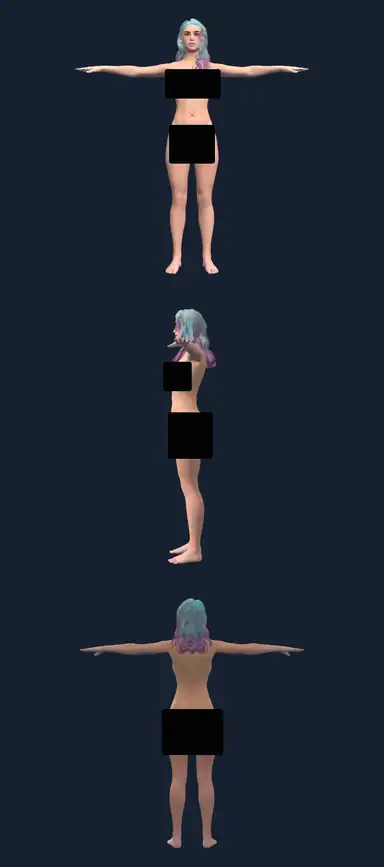
Censored previously captured adult-female technical reference views
Previously published censored captures; side framing failed.

Original detailed project research

Full records and technical evidence

These sections were moved intact from the former long Kira World homepage. Findings, photographs, safeguards and unfinished tests retain their original descriptions and source boundaries.

Avatar Builder · First full-body reference prototype · October 21, 2026

Our first full-body 3D reference.
Real renders. Anatomy still in development.

Kira Labs has adapted an existing licensed adult-female 3D base model as an initial body-and-rig reference for Evelyn Hart and the ongoing Avatar Builder research. These are actual saved software renders, not generated publicity illustrations. The model is a foundation for further work, not a newly invented or complete human anatomical body.

Front referenceSaved capture. Camera-framing check passed.
Side referenceSaved capture. Strict side-camera containment check failed.
Rear referenceSaved capture. Camera-framing check passed.

01 / Model foundation

28 visible reference meshes

All 28 meshes appeared in the saved three-view captures. The reference is a real 3D mesh and rig asset adapted for development, not proof of automatic body generation for a new person.

02 / Component movement check

512 sampled weighted vertices

A separate bounded skin test moved 512 sampled weighted vertices through five poses and restored them exactly. This does not demonstrate natural full-body walking or an accepted animation.

03 / Remaining work

Complete anatomy and movement

Full anatomy, physically realistic motion, clothing deformation, automatic photo/video-guided personalization and medical physiology remain unfinished or unverified. The overall three-view capture did not pass because of side framing.

Public evidence and licensing: These are reused privacy-censored raster renders already approved for publication; uncensored model images are not included. The reference is adapted from Base Female Character by BlackProject (CC BY 4.0), modified for testing. This is a concrete first body-reference engineering milestone—not a claim that Kira Labs created all underlying geometry from scratch or completed detailed human anatomy. Evelyn's full image and test notes → · Original capture evidence → · Engineering record ↗

Avatar Builder · October 22, 2026 · Female-first development plan

From one existing body reference.
Toward fully authored individuals.

Evelyn's female reference is the first complete anatomical creation target. Editable personalized bodies and later male characters are part of the plan, not demonstrated automatic body generation.

01 / Photo- and video-guided variants

Appearance, proportions and posture

With permission, photographs would guide visible proportions, face and appearance; video would also guide posture and motion. Unknown geometry must be represented as editable parameters with uncertainty, not invented detail. Personal source images, recordings and measurements are private.

02 / Female anatomy first

Actually build and rig a complete body

Preserve the existing fixed female reference and earlier test results. Develop a separately reviewed generic geometry/parameter exporter, demonstrate one complete female body and only then evaluate a few existing female variants. Male anatomy and Robert's synthetic body follow after separate training and acceptance.

03 / Natural motion, then clothing

Record the same actions twice

First record relaxed standing, weight shifts, smooth starts and stops, sitting, reaching, grasping and coordinated head/face movement without clothes. Repeat with fitted clothing and inspect collision, folds, fabric weight, drape and clipping. Label and retain failures alongside passes.

Rollout: test Evelyn's private standalone launcher and small chair/table/reading-tablet scene first; she should hold real conversations and pass the owner’s installer and memory checks before public download. After that, a small Kira World shell may support other female characters with separately preserved identities and memories. Male characters, bigger environments, concurrent residents and a later NewBrain backend remain conditional future stages.

Measured boundary: previous component work moved and exactly restored 512 sampled weighted-skin vertices; saved front, side and rear reference-body renders failed the overall acceptance at side-camera framing. Those are not proof of full anatomy, image-to-body generation, humanlike movement, clothing physics, shared rig migration or physiology.

Evelyn movement requirements → · Patient Horizon separate copy → · Development journal → · Source record ↗

Body and object research

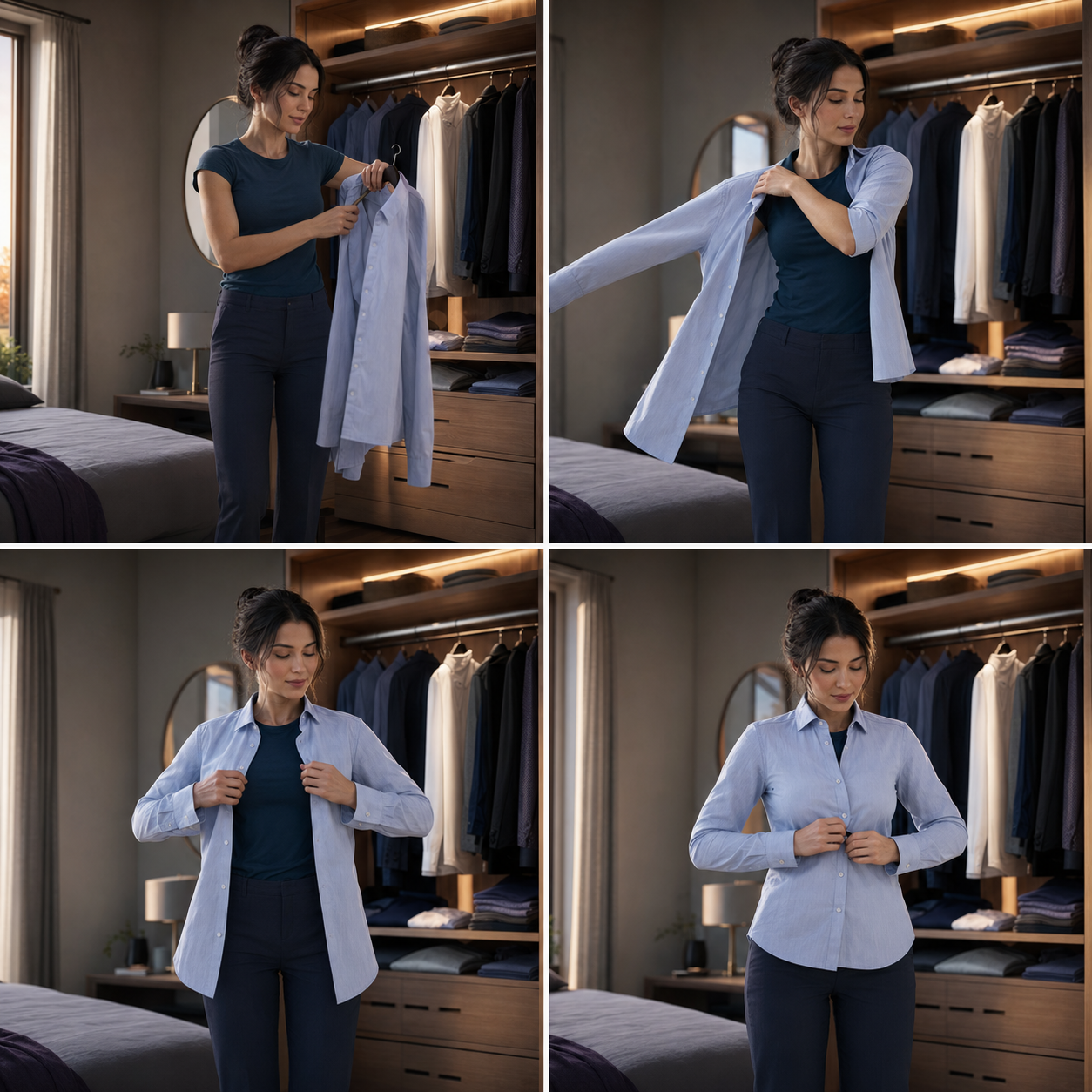
A shirt is not
a texture.

Openings, sleeves, fasteners, folds, friction and collision each need state. Dressing, folding, hanging and dropping a garment should produce different, testable results.

Current work focuses on articulated test bodies and controlled fixtures before claiming believable fabric behavior.

Concept sequence showing a shirt taken from a hanger, sleeves entered, aligned and buttoned
Generated concept · not a running simulationThe intended interaction sequence, not evidence of completed clothing physics.

Read the original research

Records and development history.

Detailed results remain available on their original Kira Labs pages. Private source media, user histories and uncensored anatomical images are not published here.